
What Happens If You’re Hit by an Uninsured Driver in Illinois?
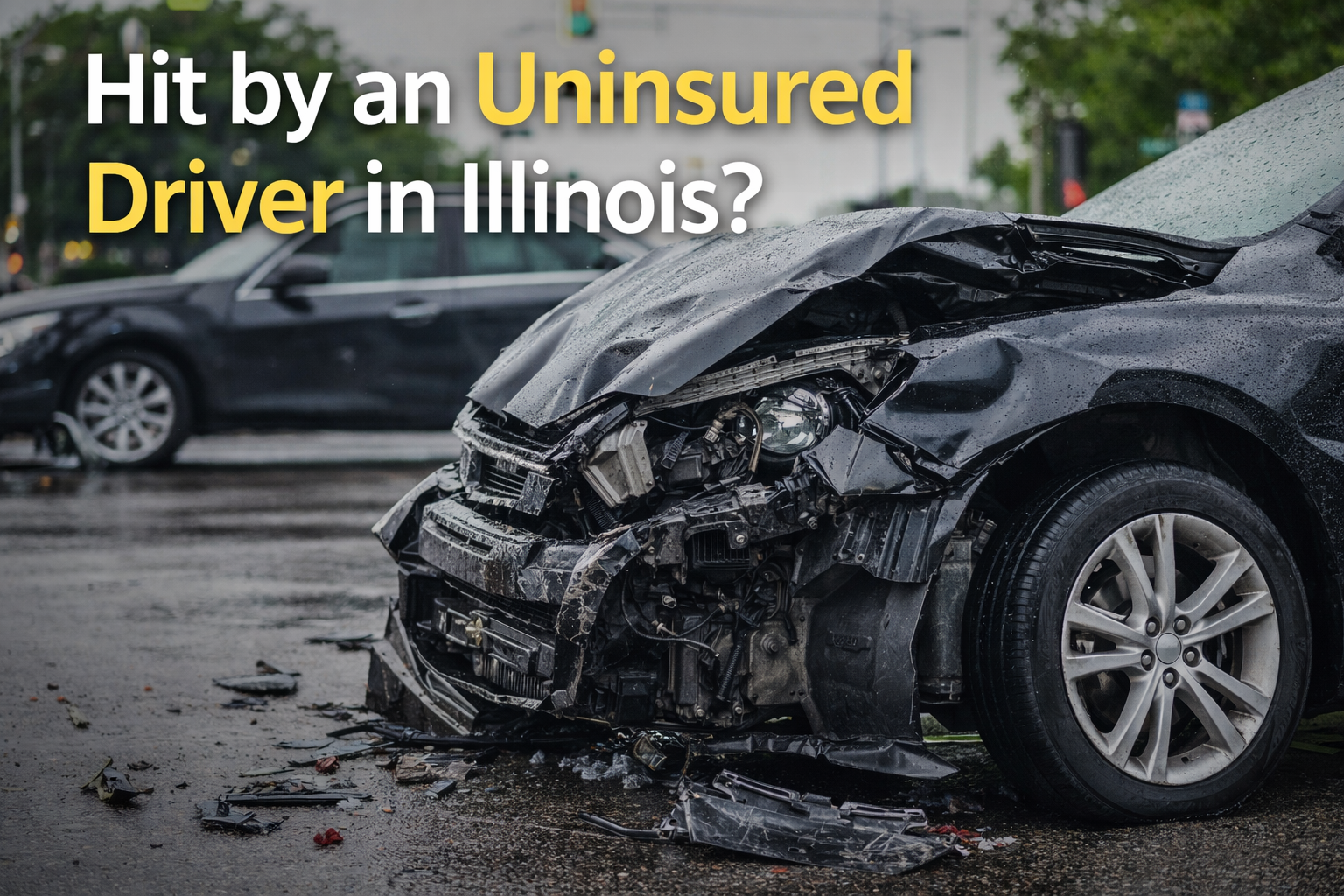
One of the most common concerns after a car accident is simple: what happens if the other driver doesn’t have insurance? It feels like everything stops right there. No coverage, no claim, no recovery. But that’s not how it works.
Illinois law requires drivers to carry insurance, but not everyone follows the rules. When an uninsured driver causes a crash, there are still ways for injured people to recover compensation. The process just looks a little different.
Is It Illegal to Drive Without Insurance in Illinois?
Yes. Illinois requires all drivers to carry liability insurance. Driving without it can lead to fines, license suspension, and other penalties. But even with those laws in place, uninsured drivers are still on the road, which is why insurance policies include protections for this exact situation.
What Is Uninsured Motorist Coverage?
Uninsured motorist coverage, often called UM coverage, is built into most auto insurance policies in Illinois. It exists specifically to protect you if you’re injured by a driver who has no insurance.
Instead of filing a claim against the other driver’s insurance company, you file a claim through your own policy. In a way, your insurance steps into the shoes of the uninsured driver and handles the claim.
What Does UM Coverage Actually Pay For?
Uninsured motorist coverage can include compensation for medical expenses, lost wages, and pain and suffering. It functions very similarly to a standard injury claim, but the difference is who is paying the claim.
That said, coverage limits still apply. If your policy has limits of $25,000 or $50,000, that becomes the maximum available recovery through UM unless additional coverage applies.
What If the Other Driver Has Some Insurance, But Not Enough?
There are situations where the driver has insurance, but it doesn’t come close to covering the damage. That’s where underinsured motorist coverage, or UIM, comes into play.
UIM coverage allows you to recover additional compensation through your own policy when the at-fault driver’s coverage runs out. It fills the gap between what their policy pays and what your damages actually are.
Can You Still Sue the Uninsured Driver?
Technically, yes. You can pursue a claim directly against the driver. The challenge is practical. Many uninsured drivers do not have the financial ability to pay a judgment, which makes recovery difficult even if you win.
That’s why UM coverage is often the primary path for compensation in these cases.
What If You Were a Passenger or Pedestrian?
You still have options. Passengers can often make claims under the driver’s policy of the vehicle they were in, or their own policy if they carry one. Pedestrians may also have access to coverage through their own auto policy or a household member’s policy.
These situations can involve multiple layers of coverage, which is why they often require a closer look at all available policies.
What to Do After an Accident With an Uninsured Driver
After any accident, the basics still matter. Get medical attention, document the scene, and gather as much information as possible. Even if the driver admits they don’t have insurance, it is still important to collect their name, contact information, and vehicle details.
It also helps to notify your insurance company promptly, especially when a UM claim may be involved. The sooner the process starts, the easier it is to preserve evidence and protect your claim.
Final Thoughts
Being hit by an uninsured driver creates uncertainty, but it does not leave you without options. Illinois law and insurance policies are structured to provide a path forward, even when the at-fault driver does not have coverage.
If you’ve been injured and have questions about how uninsured motorist coverage applies to your situation, you can click to call 815-965-2000 to connect with MacCloskey Kesler and Associates and schedule a consultation.
Disclaimer: The information provided in this blog is for general informational purposes only and does not constitute legal advice. Every personal injury case is unique, and past results or general information cannot guarantee a similar outcome. Reading this content does not create an attorney-client relationship. If you have questions about your specific situation, the attorneys at MacCloskey Kesler & Associates are available to help. Our team is standing by to answer questions and discuss your legal options based on the facts of your case.